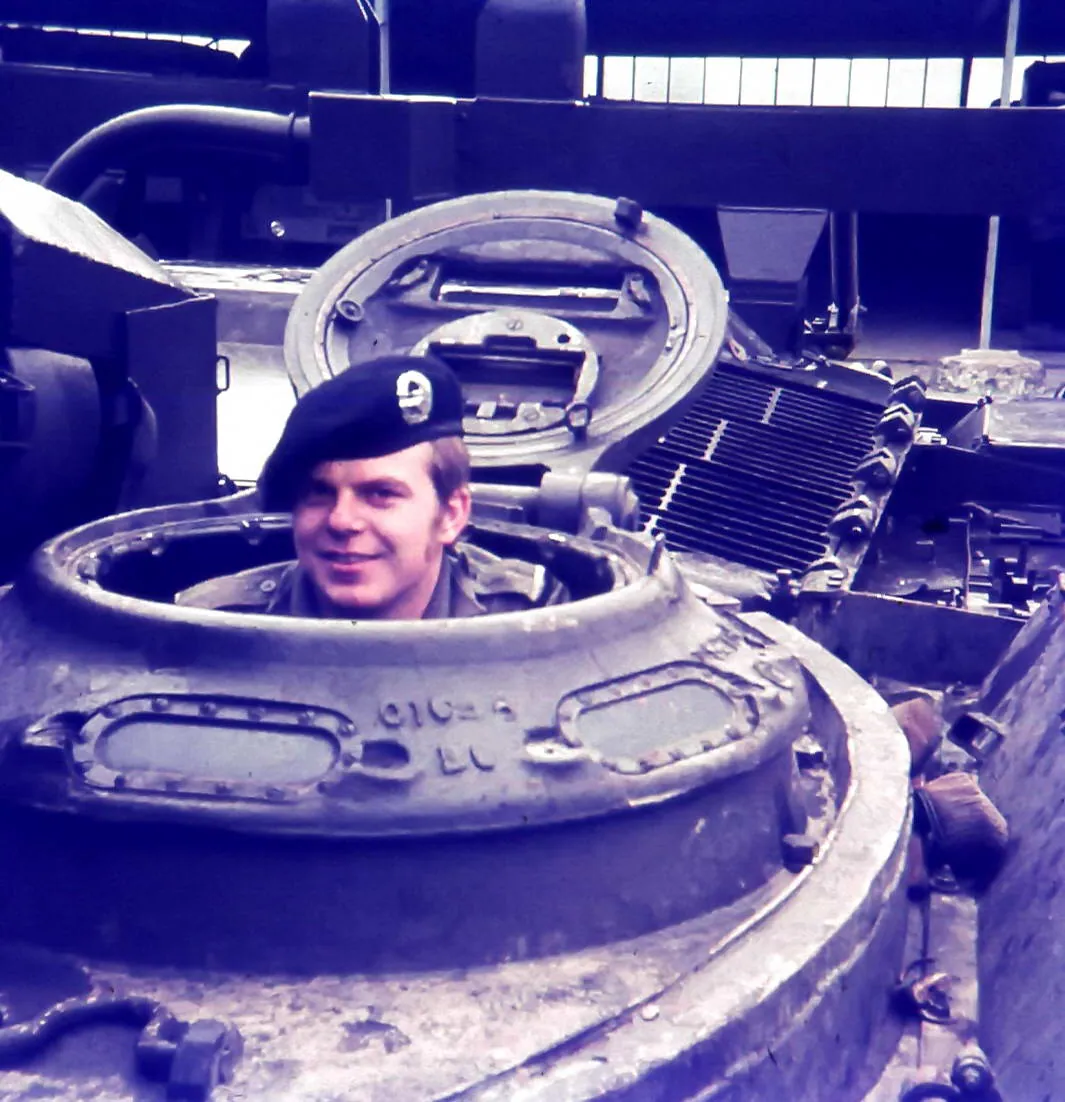
In August 1971, after completing my apprenticeship as a window dresser, I joined the Bundeswehr for eight years. For the first two years I was in Munich at the engineer school, where I learned everything about bridge building, handling all kinds of explosives, blasting itself and much more. In 1973 I moved to the armoured troops in Hemer in the Sauerland, where Panzer Regiment 100 was stationed at the Blücher barracks. In the photo I am just 21 years old.
First I got all my licences for motorcycle, car and truck with trailer. Then I was trained as tank driver, commander and instructor for the US M48 AVLB bridgelayer. In our unit, the armoured engineer company 100, we had three of these behemoths at the time. I was the leader of this bridge group and responsible for training the drivers as well as for maintenance and care of the three Yanks.
And since the beginning of 2022 there has also been an excellent kit of this vehicle in 1:35.
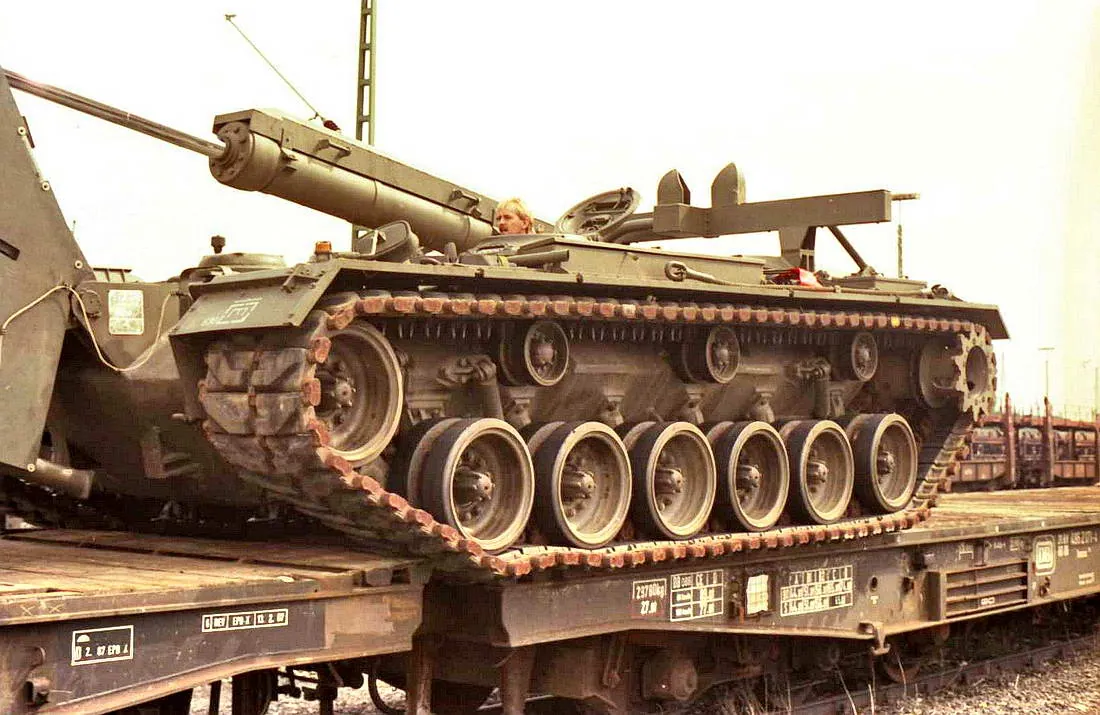
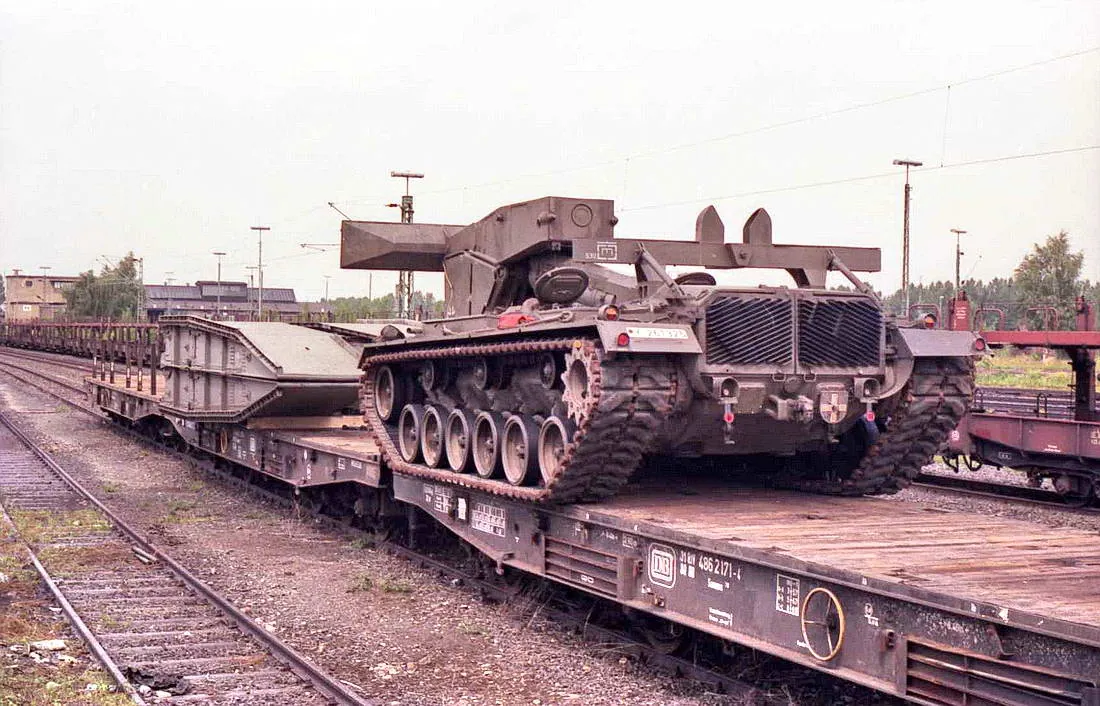
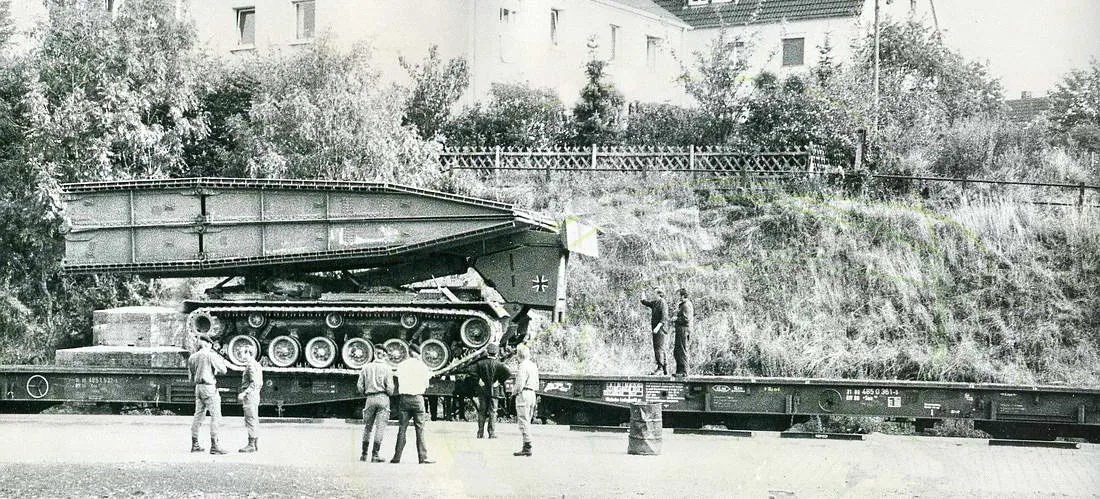
Besides technical training on the vehicle and off-road driving, loading the bridgelayers onto Bundesbahn railway wagons was also part of the tank drivers’ training. The bridge was laid down on one wagon and lashed with chains, and the tank stood on another wagon. The railway’s loading supervisor checked with a folding rule how far the chain and bridge projected beyond the edge of the wagon, and it was always a matter of millimetres. The person in overalls with the raised right arm is me; by then I already held the rank of Unteroffizier (NCO).
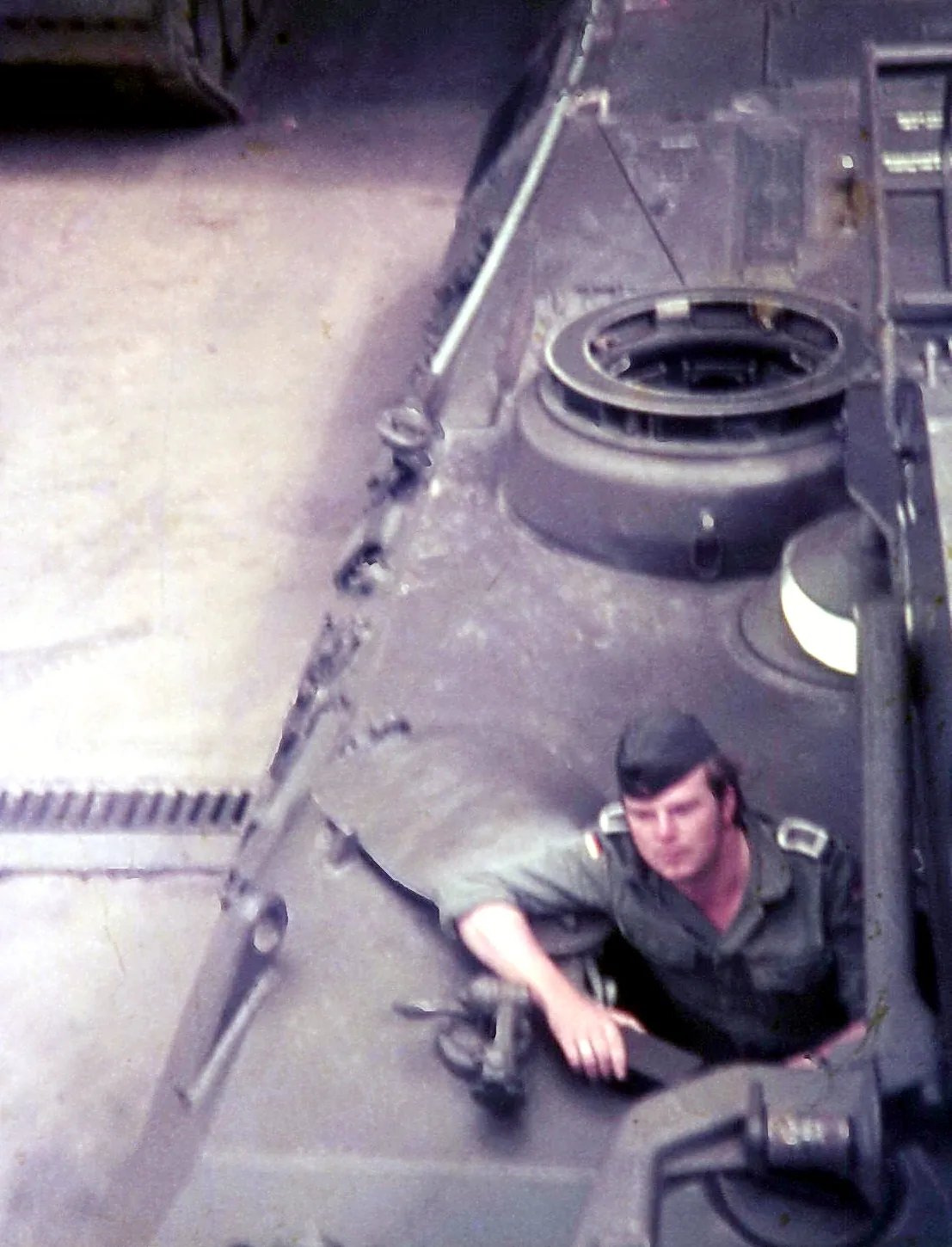
And things went on interestingly. In the second half of 1974 I spent three months on a course at the engineer school in Munich. There I was trained on the “Biber” rapid bridgelayer and obtained the licence to drive and instruct on it. After passing the course I was promoted to Stabsunteroffizier at the end of the year. On 25 April 1975 Panzer Regiment 100 became Panzer Brigade 20, and we engineers became Armoured Engineer Company 200.
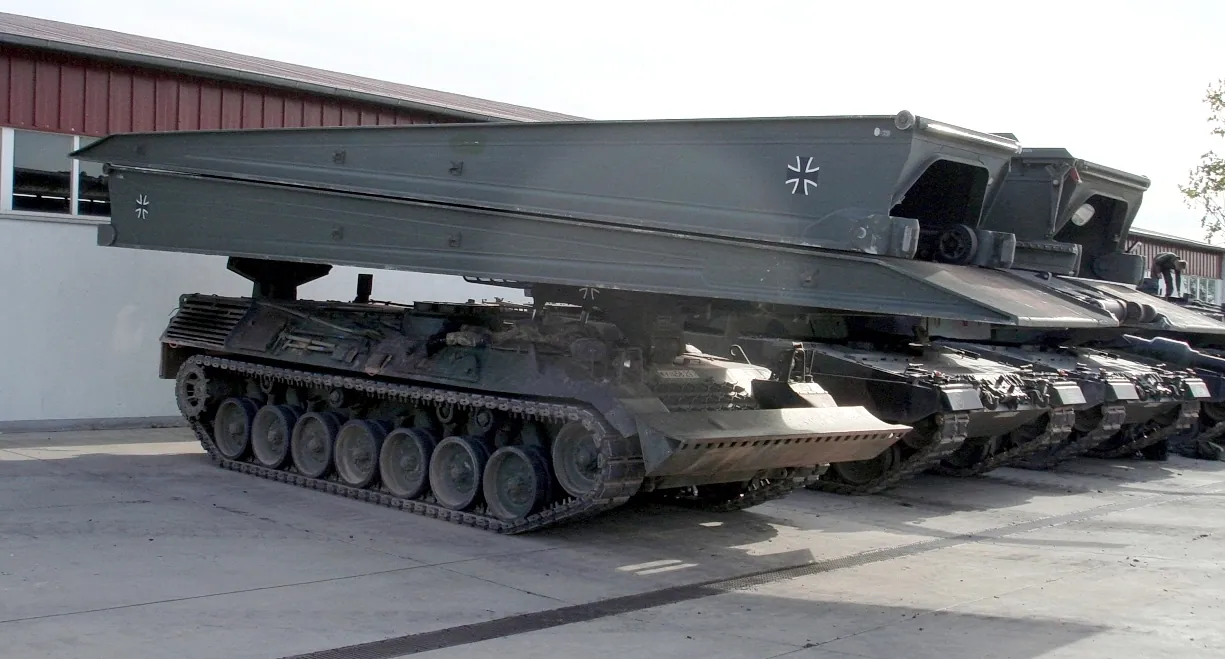
Back from Munich, four Biber were delivered a few weeks later. Every two weeks a vehicle with a bridge arrived at the Hemer station. We unloaded the tanks, assembled the bridges with a recovery tank and drove up to the barracks. At that time I was the only one allowed to drive these vehicles. But shortly afterwards, when the first soldiers with a class 2 licence came out of driving school, I started training them. Now we could keep up with the Leopards of the other companies in free-play manoeuvres. The three M48 AVLB went into the depot. My service in Hemer ended in 1978; that same year I moved back with my family to Marl, where we came from, and started a new job at Jani Gastransport, which had set up a branch in Marl. More about that in the link above – Driving trucks.